
The hydrogen water bottle that publishes its numbers
A 53-gram cap that turns any standard bottle into a hydrogen water bottle. SPE/PEM electrolysis, third-party tested — every figure below links to the instrument and conditions behind it.
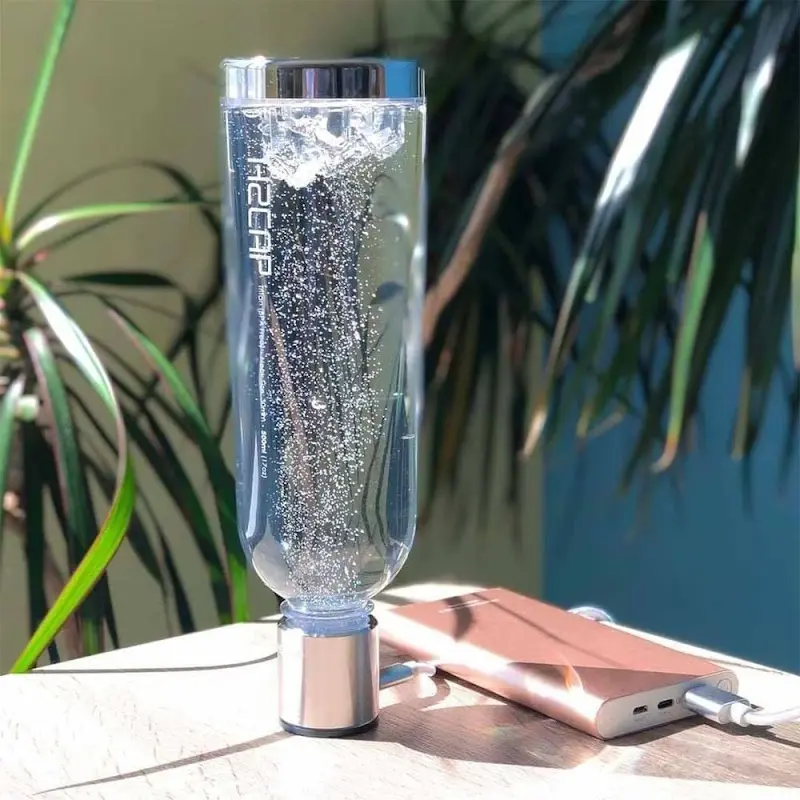
Electrolysis, separated by a platinum PEM
The generator splits water into hydrogen and oxygen, and the membrane decides what reaches your glass.
Water is split by electrolysis
A low-voltage current across platinum-coated titanium plates separates water into hydrogen and oxygen gas.
The PEM keeps only H₂ in your water
The proton-exchange membrane physically separates the chambers, venting oxygen and byproducts away from the drinking side — measured separation efficiency of 99%.
USB power, no battery to age
Power comes from any USB source — power bank, laptop, adapter. Nothing inside degrades with charge cycles, which is part of how the cap stays at 53 g.
Most cheap hydrogen water bottle designs skip the membrane entirely and electrolyze in a single chamber, which leaves ozone and chlorine in the glass. A proton-exchange membrane is what separates a hydrogen water bottle you would actually drink from an electrolysis toy — and it is the single most expensive component in the cap.
Full technology deep-diveThree finishes, one engine
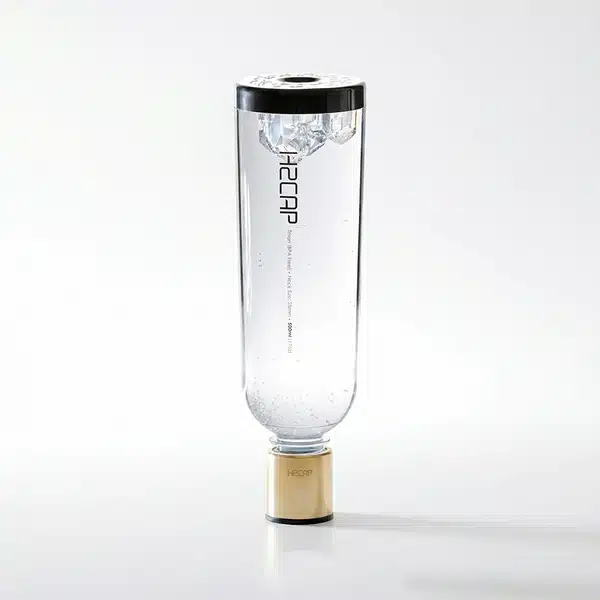
The same 2-chamber, 9-layer generator inside — choose the case that fits you.
Silver — polished stainless steel 304 PinkGold — rose-gold finish Gold — 18K gold-plated case
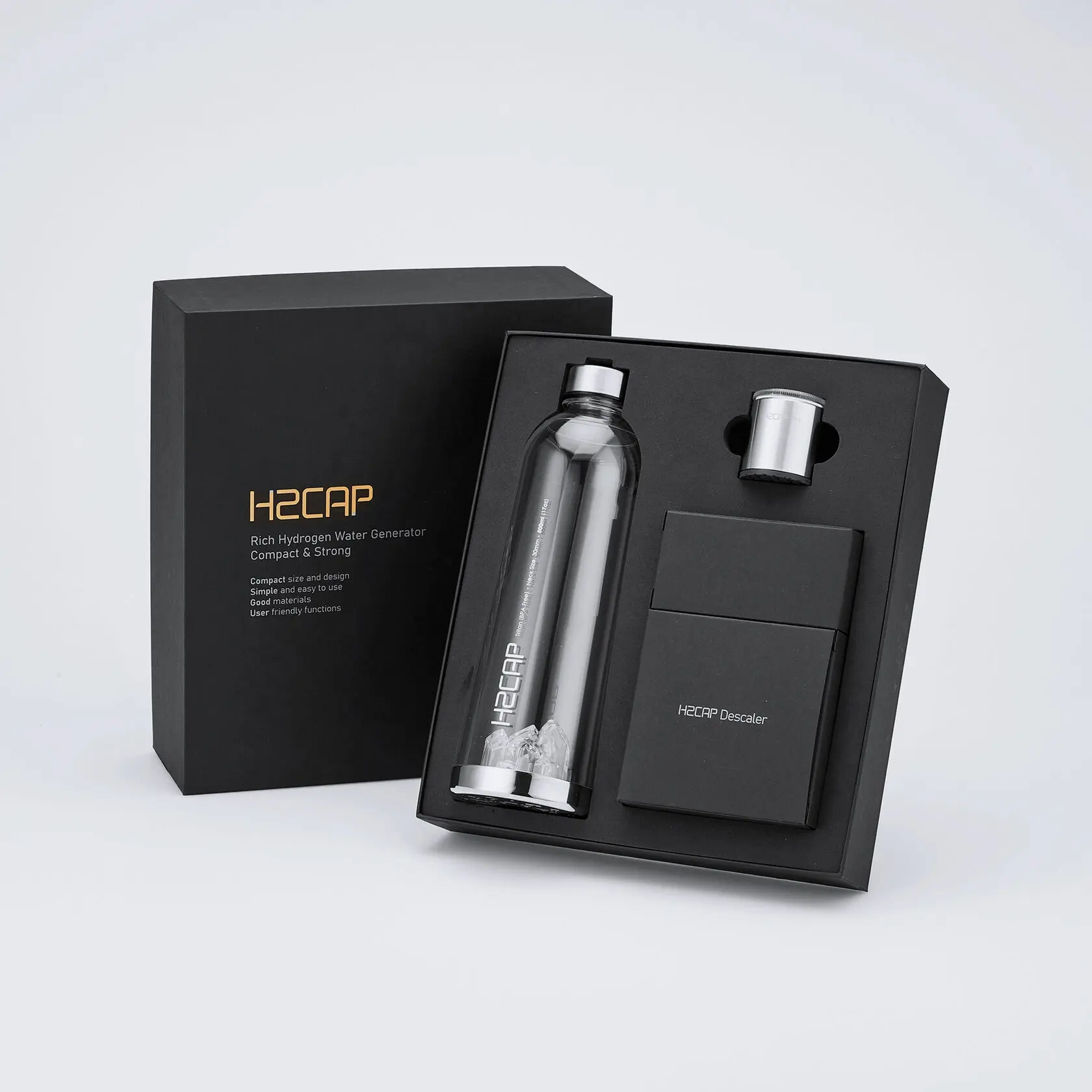
H2CAP Premium Design Bottle — 500 ml, developed for H2CAP / H2CAP Plus.
The Premium Design Bottle
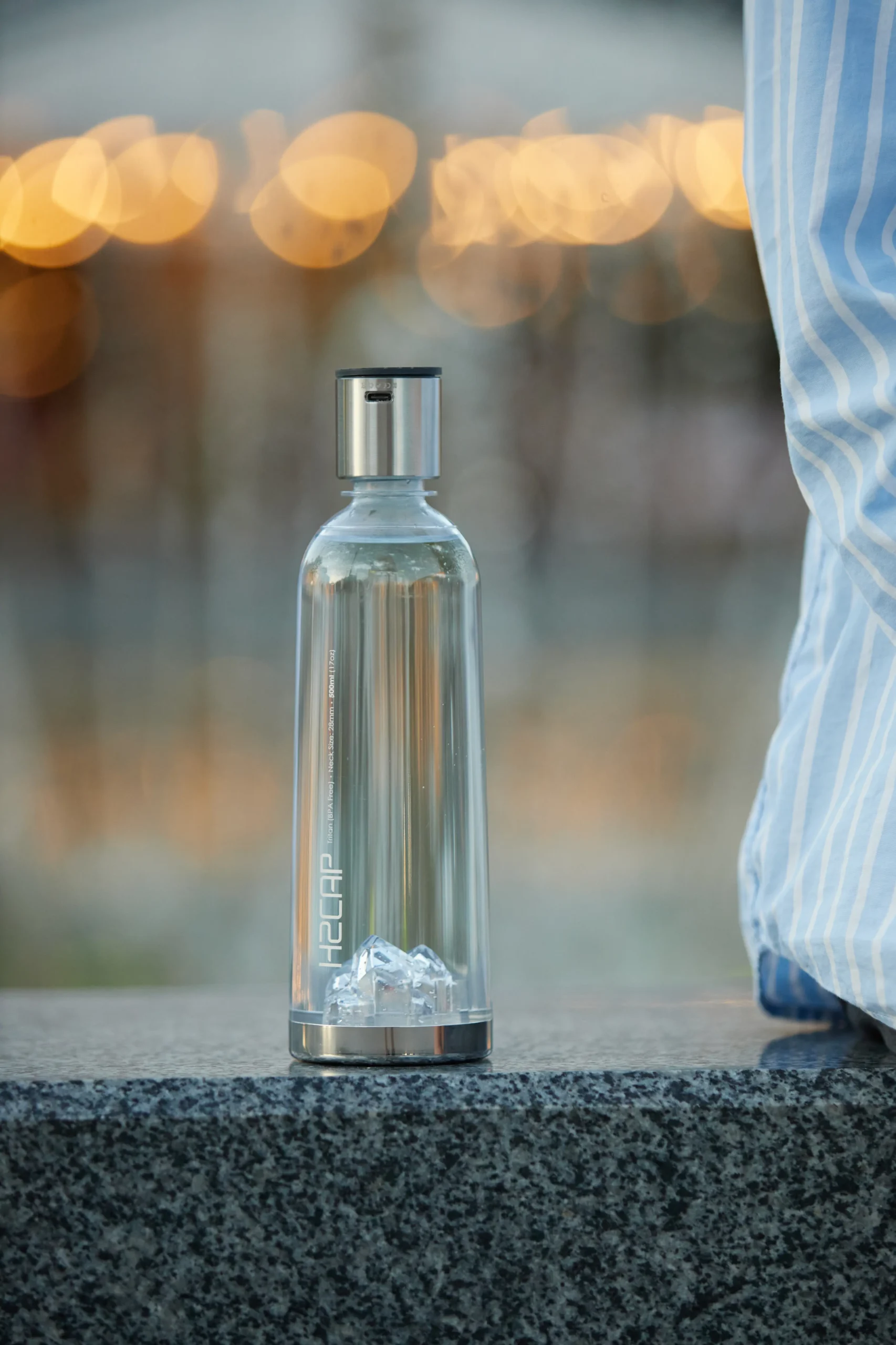
A 500 ml Tritan bottle with glass-like clarity — developed for the 30 mm neck of H2CAP and H2CAP Plus, and safe enough to carry as an everyday bottle on its own.
A base engraved in Hangul
The bottle's base is stainless steel 304, embossed with Korean characters in relief — a minimal detail that gives it a solidity and beauty beyond an ordinary water bottle.
A crystal inside the water
Premium-grade Tritan with a crystal structure molded in 3D relief inside the bottle — as the light shifts, the water catches soft, rainbow-like reflections.
Material: Tritan · Stainless Steel 304 · PP · Silicone | Includes bottle, cap, and 3 spare O-rings. Check your bottleneck size (30 mm) before pairing with H2CAP / H2CAP Plus.
Three and a half minutes, start to finish
H2CAP PLUS fits standard 28 mm and 30 mm bottle necks — no proprietary container.
- Fill & attachFill the bottle, screw the cap on, turn it upside down.
- Connect USBAny USB source starts the cycle automatically — there is no battery inside.
- Wait for the orange LED3:30–5:00 depending on water quality; the sensor stops the cycle on its own.
- Detach & drinkDrink soon, or keep the lid closed — sealed, the H₂ holds for days.
This form factor was built for three situations: travel, where a 53 g cap beats a 500 g bottle; offices, where USB power is everywhere; and households already buying bottled water, where the same bottles simply gain a cap. Which necks actually accept a hydrogen water bottle cap is covered in our fit guide. If the unit will sit unused for a few days, store it with a little water inside and the lid closed — the PEM is hydrophilic and performs best kept moist. Avoid water above 40°C and carbonated water.
Questions about the H2CAP PLUS?
Product questions, technical support, or wholesale terms — we reply within one business day.