
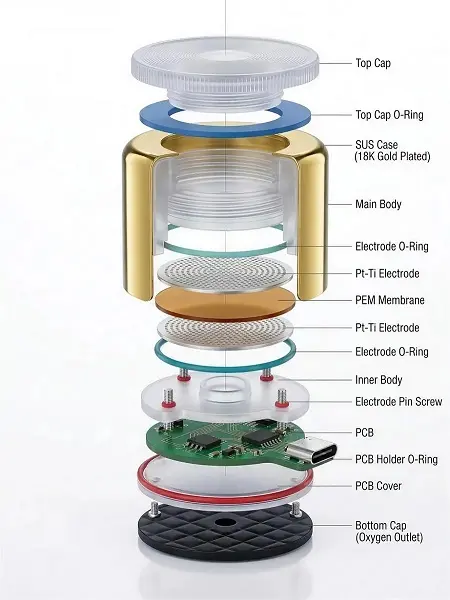
Nine layers, cross-mesh geometry
Pt-Ti Cathode & Anode Discs
Platinum-coated titanium on both sides of the membrane — the catalyst that drives the reaction efficiently at low voltage, chemically inert so nothing leaches into the water.
Titanium substrate
Corrosion-proof backbone that survives thousands of wet-dry cycles without oxidizing or shedding particles.
Cross-mesh plates
Mesh instead of solid plate maximizes contact area with the water — more surface, more H₂ per cycle.
3:30 Cycle — Ready Anywhere
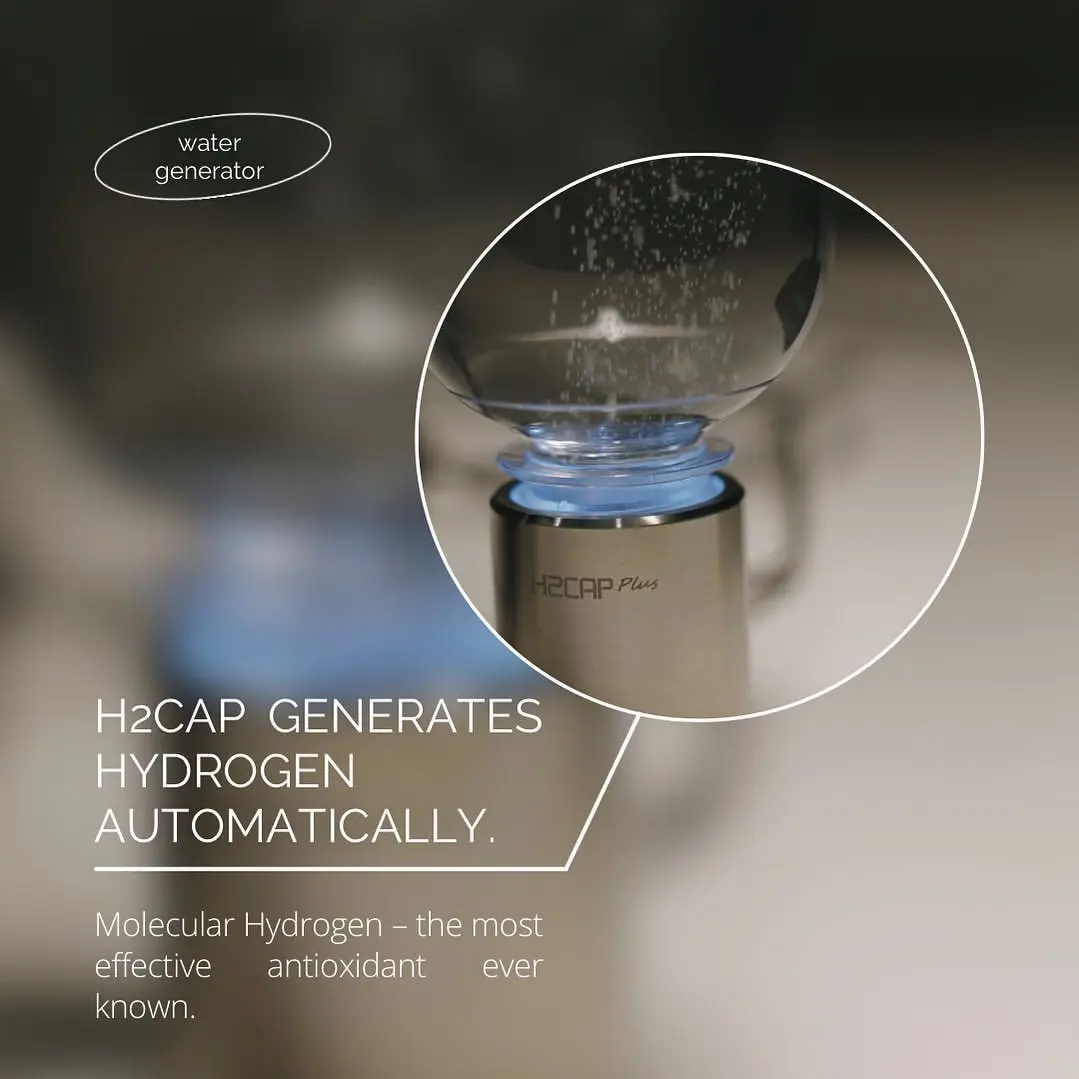
In just 3:30, the H2CAP PLUS turns 500 ml of water into hydrogen water above 1,000 ppb — free to use outdoors, during workouts, while camping, or at school.
Electrode monitoring
The unit continuously checks the condition of the plates and membrane, and signals via LED when the PEM needs attention.
Together, the stack and the controller are why this hydrogen water bottle technology holds its output as the unit ages: the platinum catalyst does not deplete, the titanium does not corrode, and the sensor compensates for water quality instead of assuming it. The practical result — 1,000–1,500 ppb across tap, filtered, and bottled water — is documented with instruments and conditions on our H2 concentration test page.

What touches your water
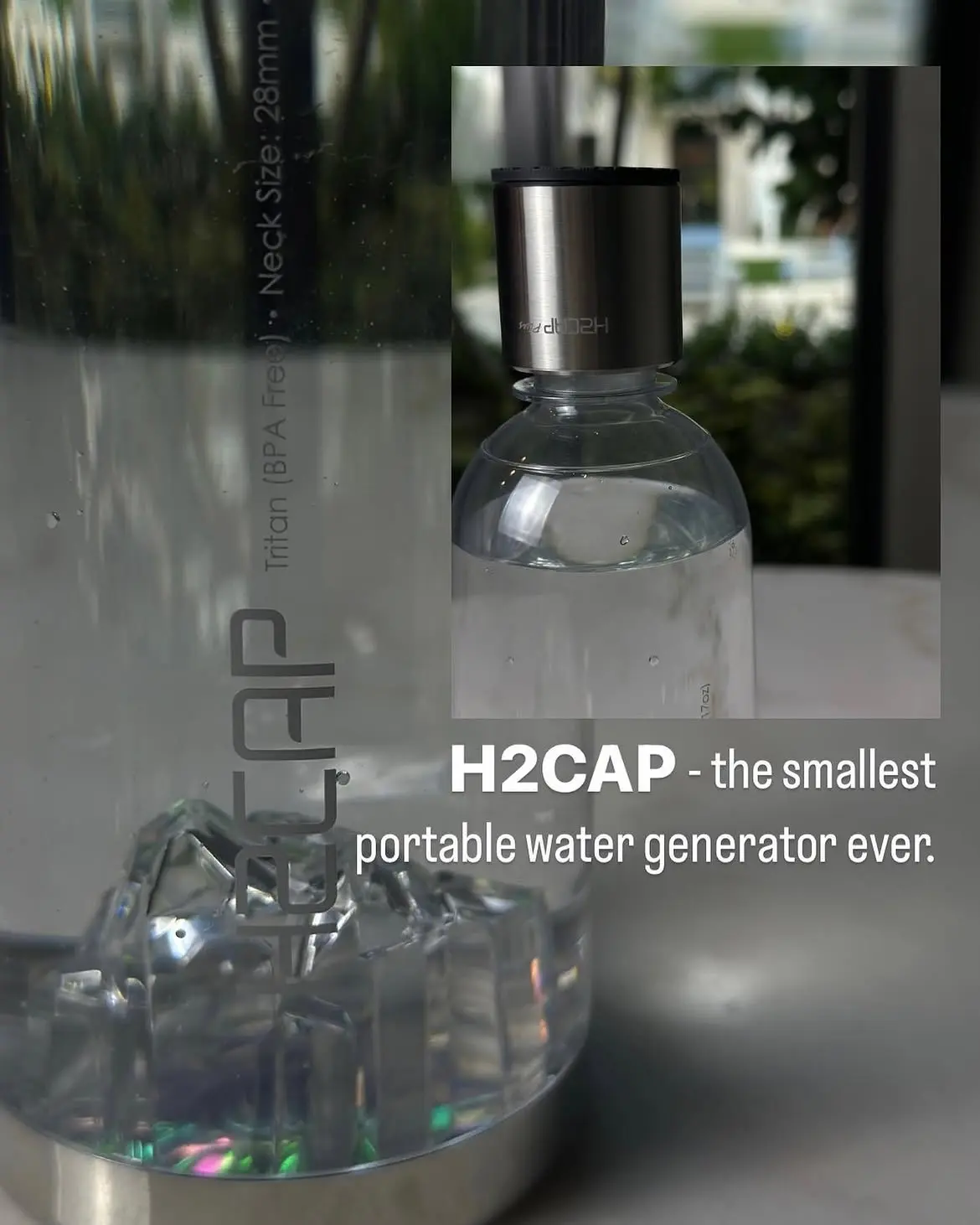
The body is Tritan — Eastman's BPA-free copolyester used in medical and food equipment — sealed with food-grade silicone. Combined with the platinum-coated titanium stack, every part in the water path is chosen to stay chemically silent while current is flowing.
Materials matter more in hydrogen water bottle technology than in ordinary drinkware, because the cap sits in direct contact with the water while current passes through it. That is why the wetted parts here are tested rather than simply specified. Independent food-contact testing to LFGB and EC 1935/2004 covers not only the Tritan housing but the electrode plates themselves — the component most buyers never think to ask about. A separate restricted-substances screen examined 51 individual parts, and every regulated substance came back not detected. And an accredited Korean laboratory ran water from a finished unit against national drinking-water standards, which it met on every parameter tested.
None of that tells you whether hydrogen water does anything for your health; that is a separate question, and we treat it separately. What it does tell you is narrower and checkable: nothing in this cap is putting something into your water that should not be there. Issuing bodies and report numbers are listed on the certifications page, and we send the full documents to distributors on request.
The pages below continue where this one stops: exact figures on the specifications page, and every certificate behind the hydrogen water bottle technology claims with original documents attached.